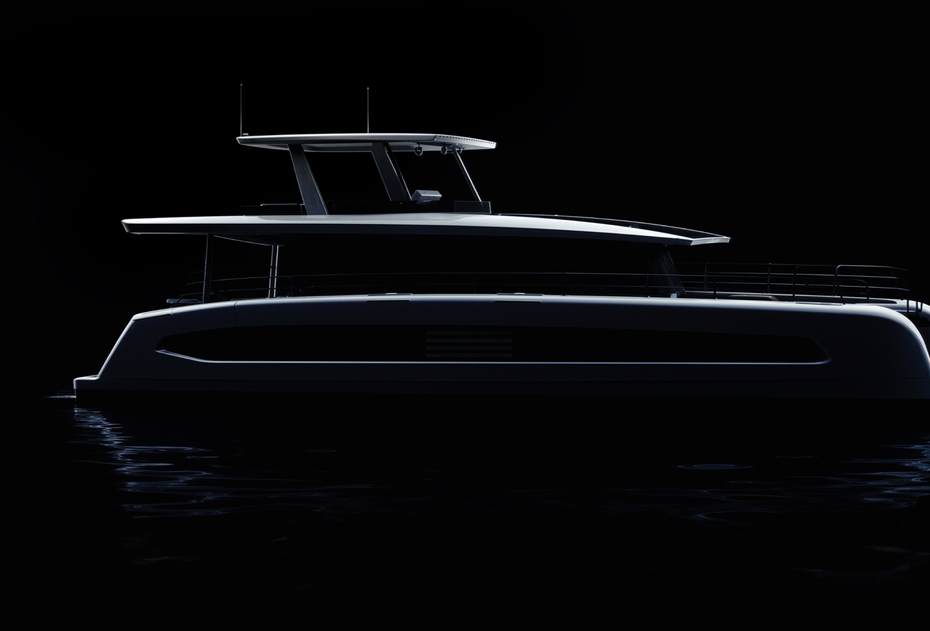
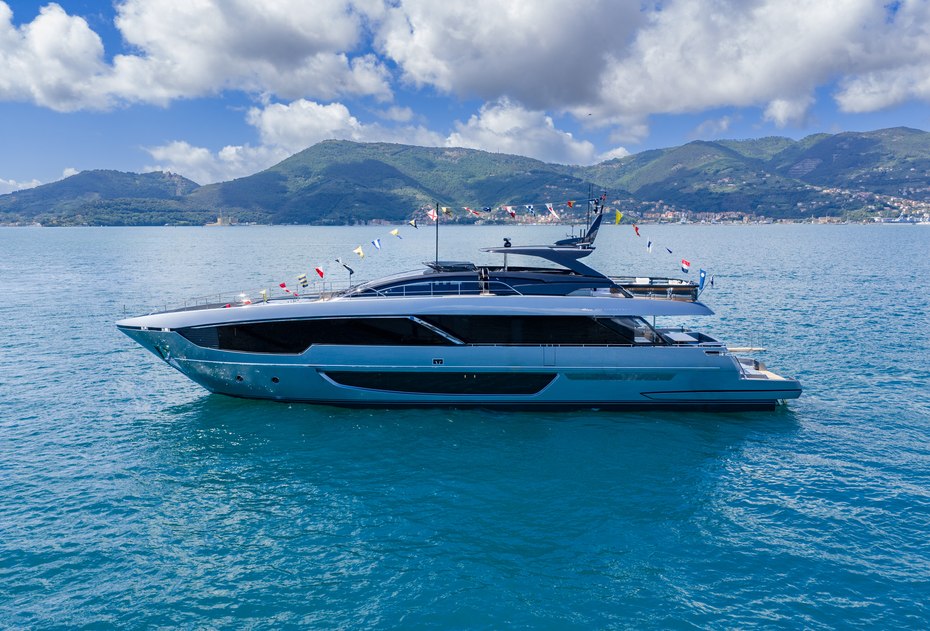
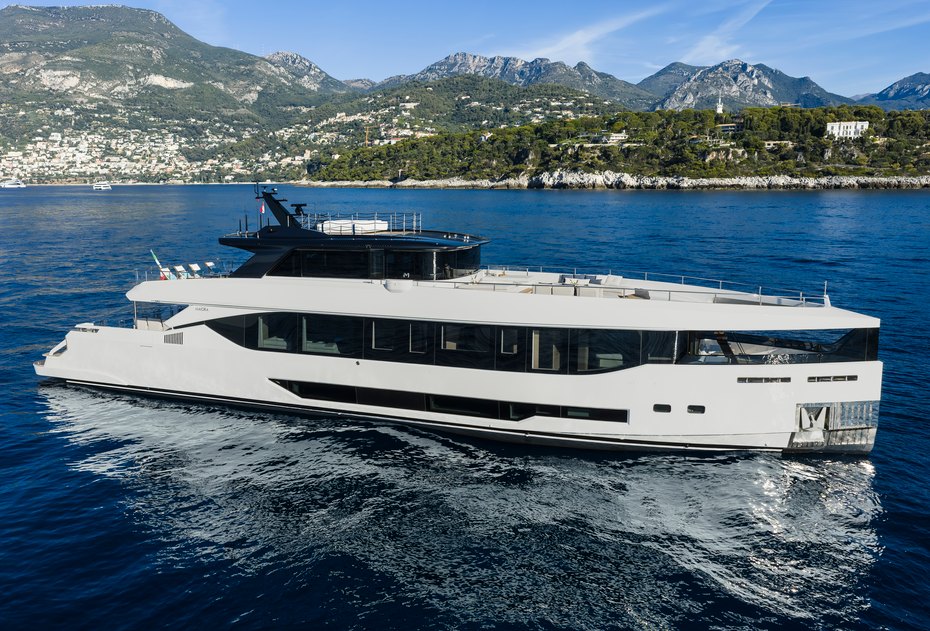
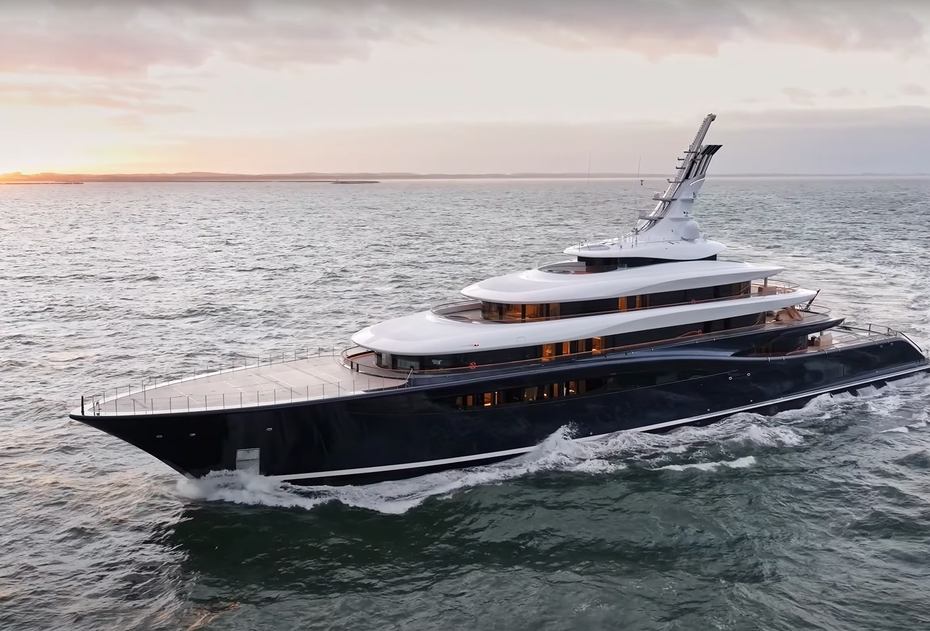
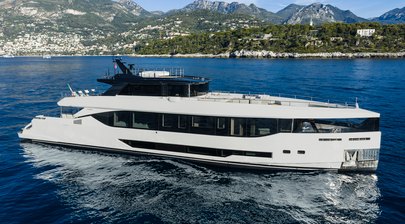
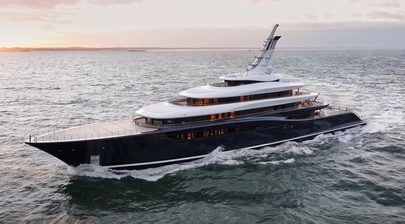
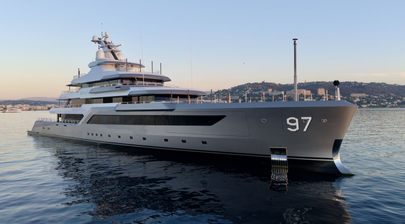
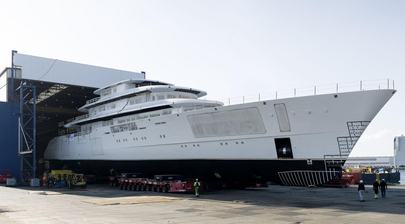
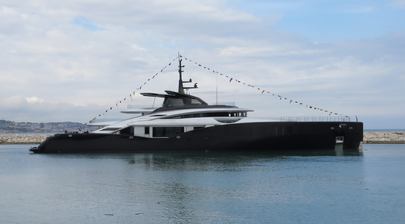
With exterior styling by Malcolm McKeon, naval architecture by De Voogt Naval Architects, and interiors by m2atelier, the Thalassa introduces a low-profile design influenced by sailing yachts and includes the largest beach club ever built on a Feadship yacht.
A Lower Profile Defined by Sailing Yacht Influence
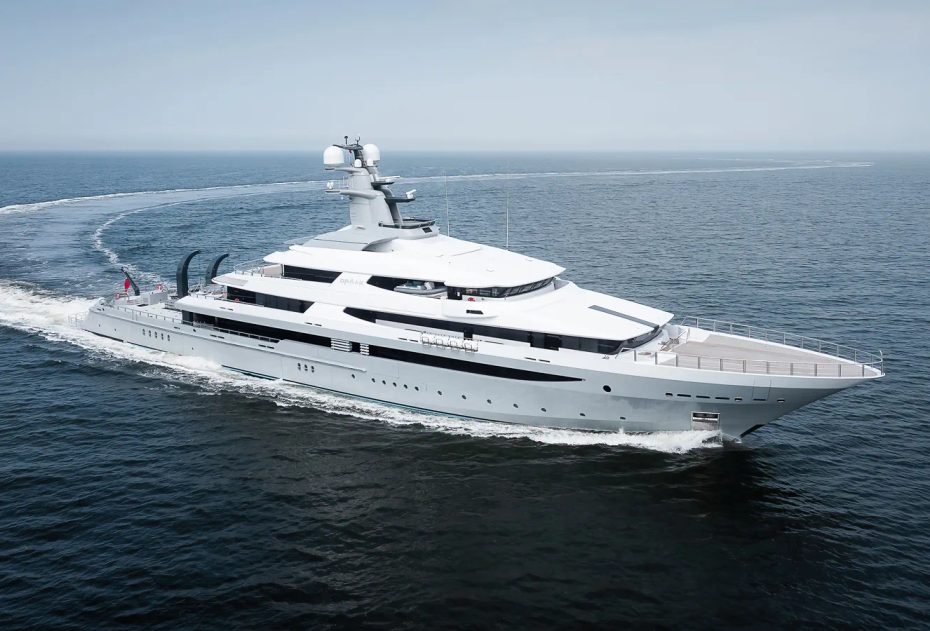
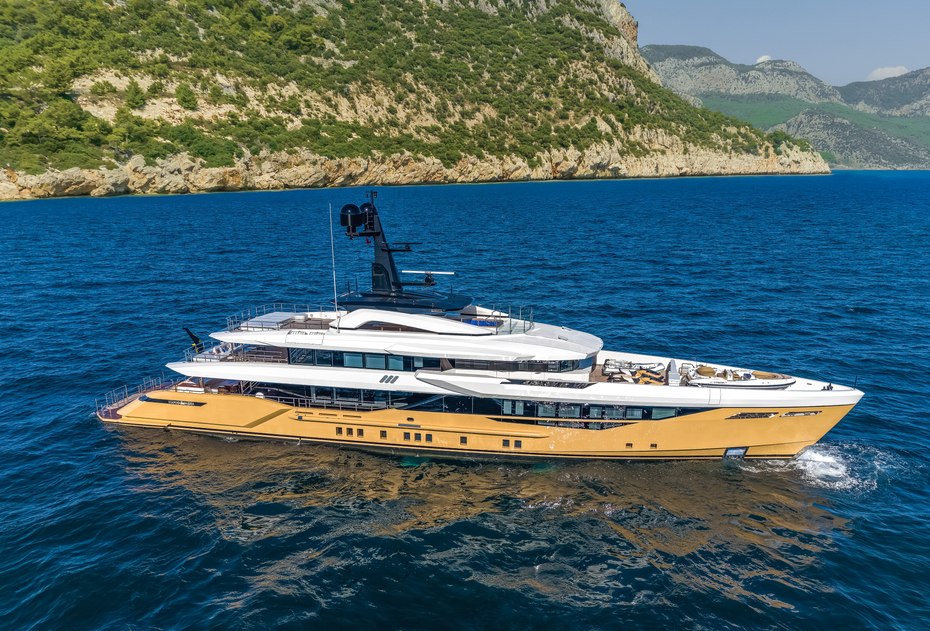
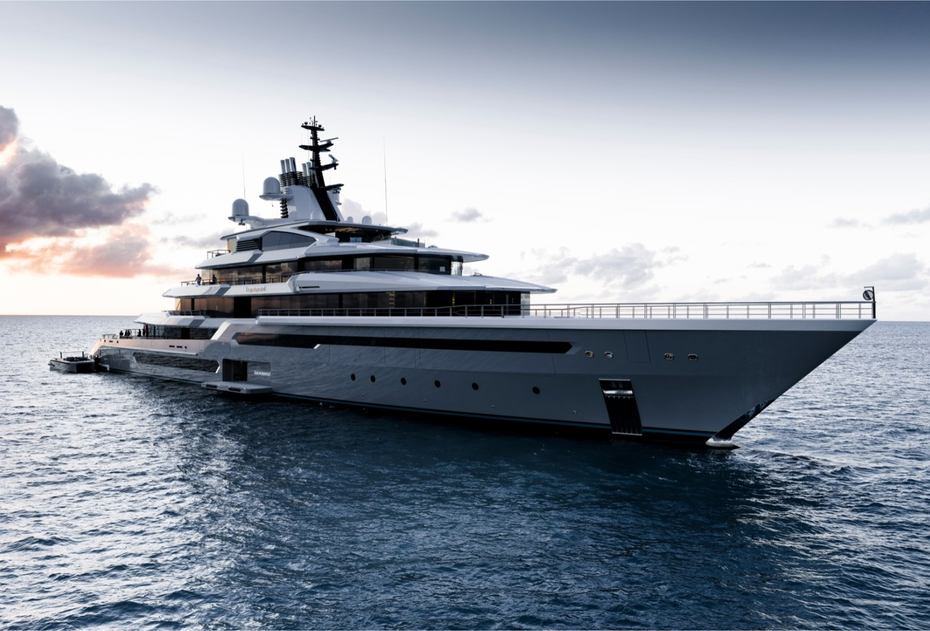
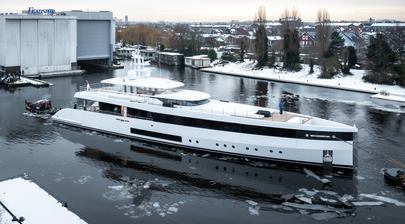
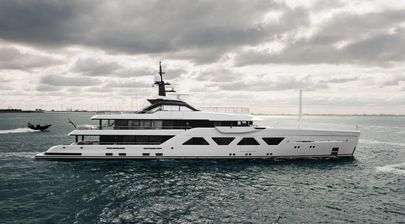
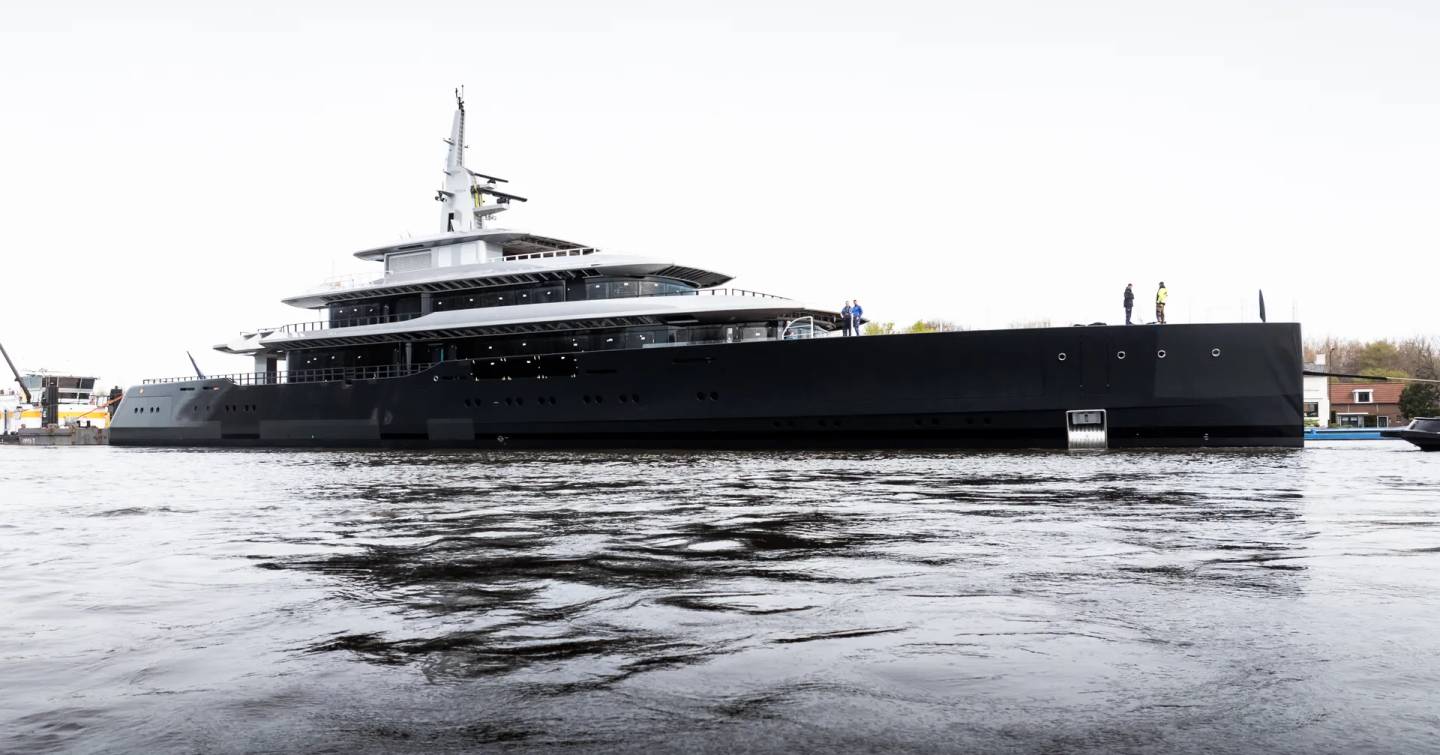
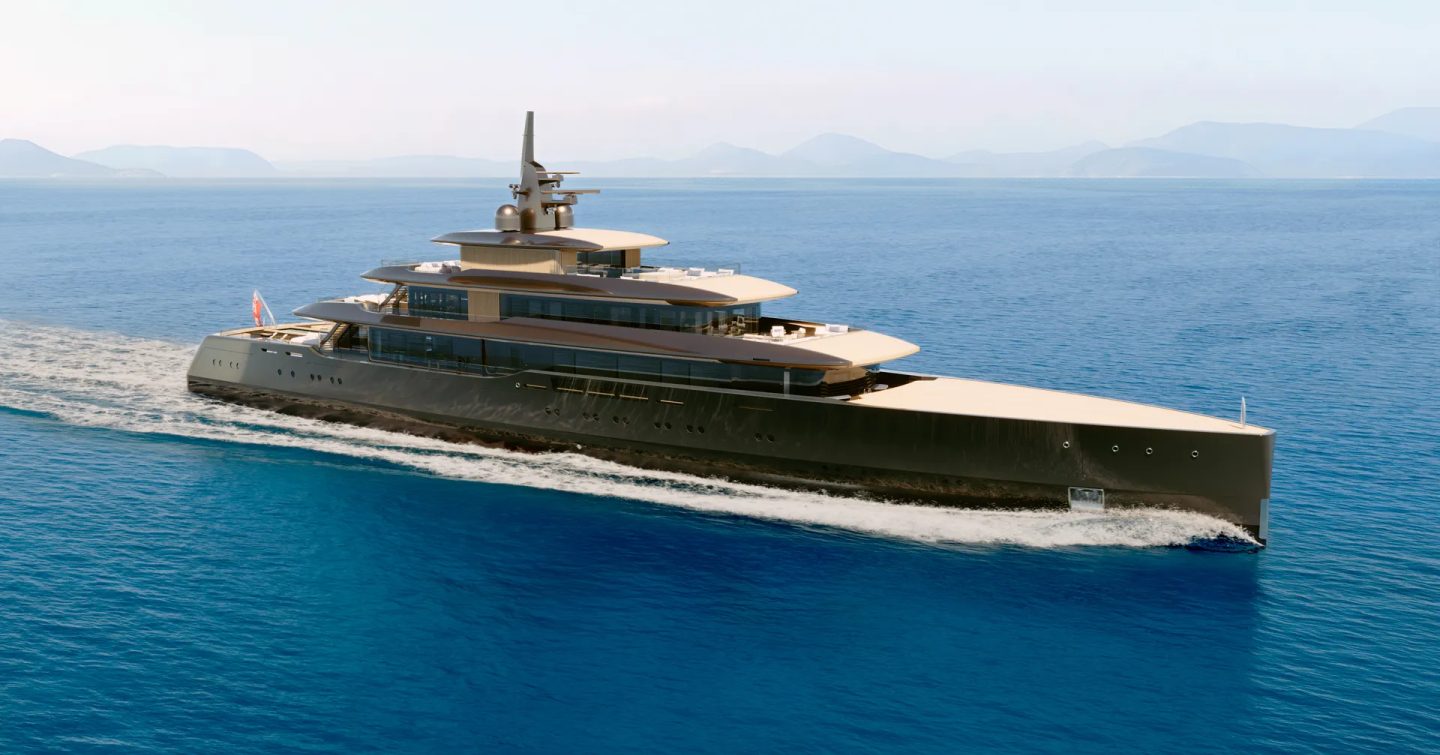
Project 826, also known as Thalassa, departs from conventional superyacht proportions with a notably low freeboard and a clean, elongated silhouette. Her graphite-colored hull carries a subtle tumblehome before drawing the eye aft to a sculpted waterfall stern finished in teak.
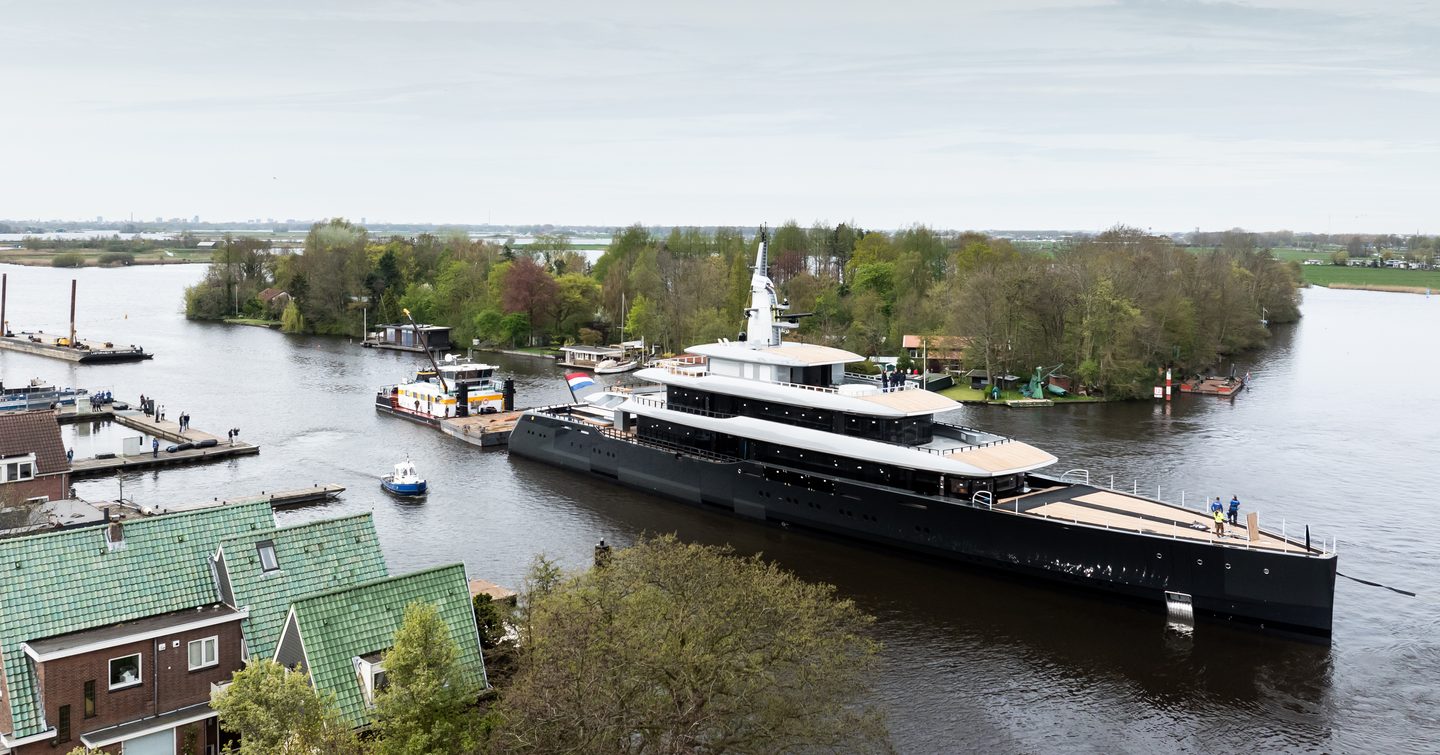
The profile is deliberately restrained. Just two decks rise above the main deck, creating a balanced, horizontal emphasis reinforced by a silver superstructure set against full-height glass. Black accent panels and vertical teak detailing introduce contrast without disrupting the overall clarity of the design.
Taking a cue from his specialist knowledge of high-performance sailing yachts, the plumb bow is sharp and the hull slowly widens aft to reduce resistance and drag."
Feadship
McKeon’s background in high-performance sailing yachts is evident throughout. A sharp plumb bow and gradually widening aft sections are intended to reduce drag, while the uncluttered foredeck and flowing lines give the yacht a visual lightness rarely seen at this scale.
A Record-Breaking Beach Club Concept
At 165 square meters, Project 826 introduces the largest beach club ever developed by Feadship. Arranged across two levels, the space is designed as a central hub rather than a secondary feature. A recessed lounge with bar seating forms the core, while a raised perimeter level connects to large fold-out terraces that extend directly over the water. These platforms sit just 700 millimeters above sea level, creating a closer relationship with the water than typically seen on yachts of this size.
Engineering played a key role in achieving this openness. Rather than housing the mechanisms for the terrace doors within bulky structural sections, Feadship integrated them into the doors themselves. This approach reduces visual obstruction and delivers near-continuous 180-degree views from within the space.
Additional facilities extend the beach club’s function beyond relaxation. A connected watersports zone, gym spaces on both sides, and a dedicated massage room position the area as a full lifestyle deck, supported by fold-out terraces for training and recovery.
A Layout Focused on Flow and Visibility
The layout centers on maintaining constant visual and physical connection to the surroundings. Walkaround decks on both main and upper levels create uninterrupted circulation, while a winter garden uses folding glass panels to shift between enclosed and open-air use.

A key social space sits on the main deck, where a 6.37-meter pool anchors a poolside lounge. The pool’s curved glass base introduces natural light into the beach club below, reinforcing the vertical relationship between decks. Throughout the motor yacht, glazing is used extensively but carefully, with minimal structural interruption to preserve sightlines.
Forward on the main deck, the bridge, captain’s cabin, and ship’s office are positioned with direct sightlines over a touch-and-go helipad. This space is designed with dual use in mind and can convert into a pickleball court with removable netting.
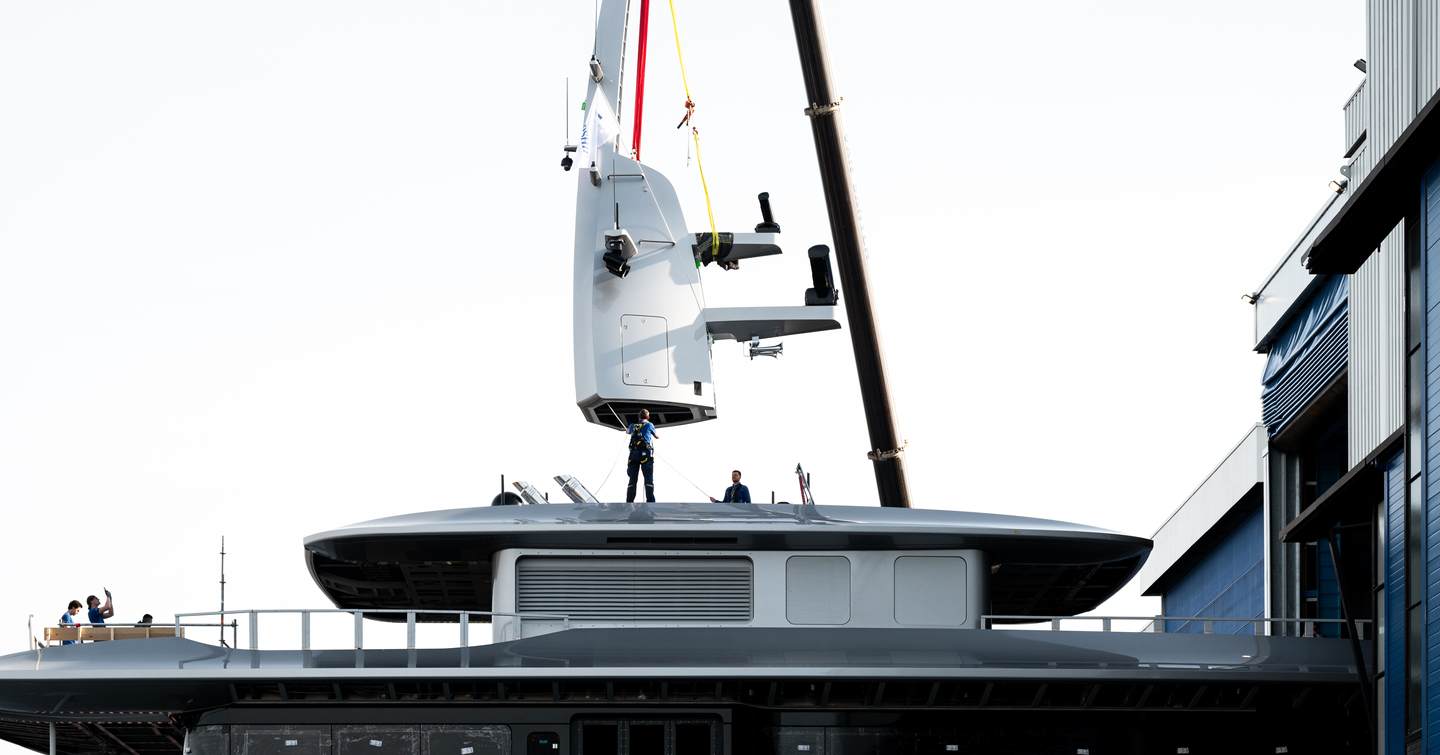
The sundeck continues the yacht’s restrained approach, with a minimal hardtop supported by widened structural walls rather than pillars. These walls frame a circular bar and seating area, maintaining clean lines while providing shelter. Technology has also been integrated with a light touch. Flat Starlink receivers remove the need for large satellite domes, keeping the mast uncluttered and in line with the overall design language.
Performance Built Around Reliability
Project 826 adopts a straightforward propulsion setup, using diesel engines driving directly to shafts and propellers. Auxiliary power is supplied by three Scania generators housed in a soundproofed compartment.
While detailed performance figures remain consistent with earlier disclosures, the yacht is expected to reach a top speed of around 16 knots, cruise at 14 knots, and deliver a transoceanic range of approximately 5,500 nautical miles at 12 knots.
A Busy Build Program at Feadship
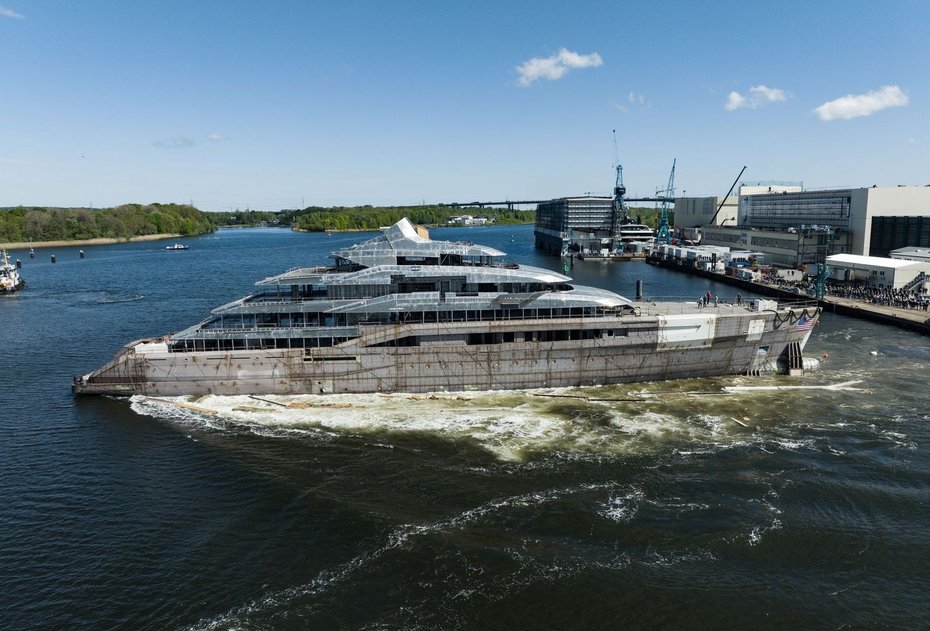
Project 826 enters the water during a particularly active period for Feadship, with multiple large projects progressing across its order book. According to YachtBuyer MarketWatch, the largest yacht database in the world, the yard currently has 17 yachts either in build or on order, placing this launch within a broader pipeline of ongoing deliveries and developments.
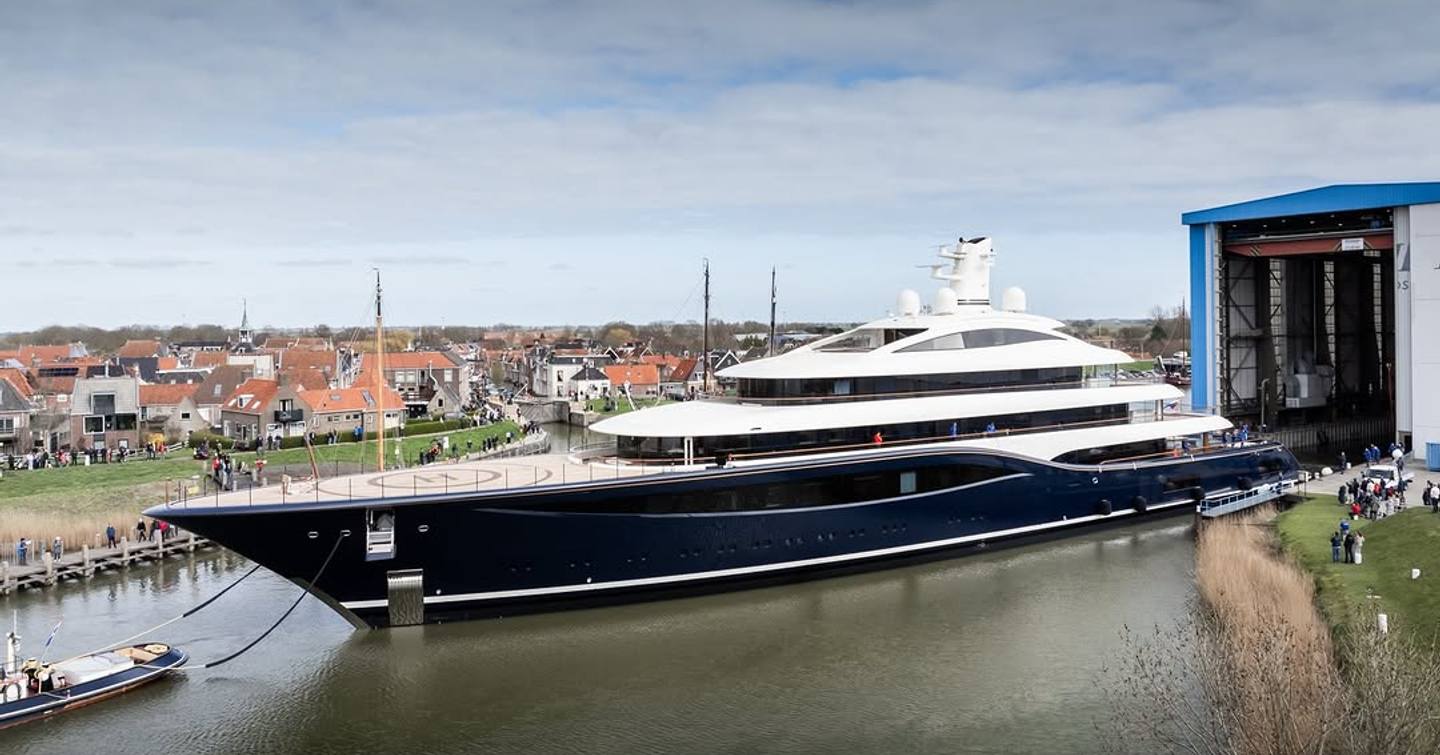
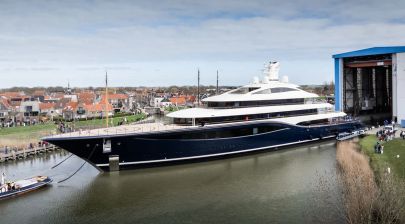
At the top end, the 101m Project 1014 was recently launched in Makkum and remains on track for 2026 delivery, ranking among the largest yachts globally under construction. The 72m Project 719 also emerged earlier this year as her hull transferred to Aalsmeer for further build stages ahead of a planned 2028 completion.
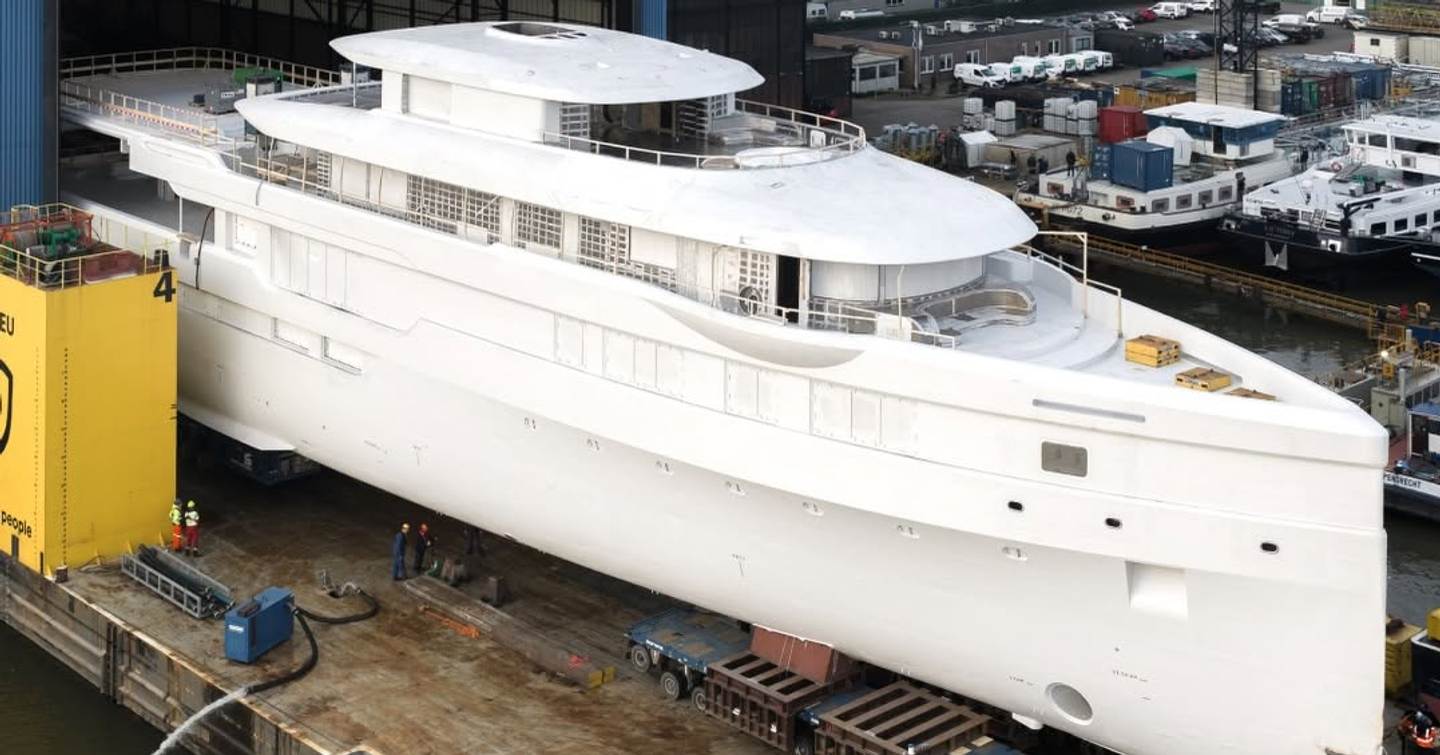
Alongside these larger builds, the yard has also delivered the 50m Graycliffs, adding a completed custom project to its current run. Within this context, Project 826 stands out for its design direction, introducing a lower profile, sailing-influenced exterior, and one of the most technically ambitious beach club arrangements seen on a Feadship to date.
Looking to own a Feadship yacht? View all new and used Feadship yachts for sale, tracked in real-time by YachtBuyer MarketWatch. We scan the entire market to ensure access to all genuine listings, saving you time. Alternatively, you can view all other superyachts for sale.